

-
Legendary world championship-winning nitro tuner Leonard Hughes passes away
-
VizionOne's Grunt of the Race program awards NHRA nitro crewmembers
-
Texas FallNationals Fan Fest will deliver a galaxy of NHRA stars
-
NHRA Countdown to the Championship hits halfway point in dramatic fashion
-
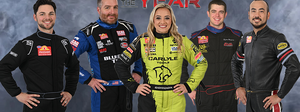
2026 NHRA Rookie of the Year candidates announced
-
-
Teams of Langdon, Beckman, Anderson, Angie Smith lead Crew of the Year battle
-
JEGS Allstars preview: A closer look at each of the contenders in each class
-
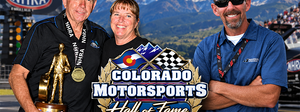
Bandimere, Whiteleys to be inducted into Colorado Motorsports Hall of Fame
-
Drag Racing Association of Women opens applications for new board members
-
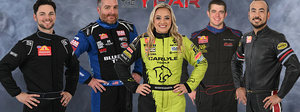
Rating the challengers for the 2026 NHRA Rookie of the Year award
-
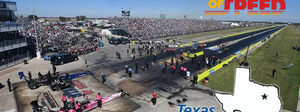
Stampede of Speed brings Texas-sized showdown to Texas Motorplex
-
Watch the Division 3 Lucas Oil Series race from St. Louis for free on NHRA.tv
-
How Kalitta Motorsports elevates its hospitality experience with Deecell
-
Blockbuster stars set for Stampede of Speed Texas Music Festival
-
Unofficial Mission Foods points standings
- ad
-
The faces of prerace: See the Sunday intensity building at the Napa Auto Parts NHRA Midwest Nationals
-
World Wide Technology Raceway sells out for sixth consecutive Saturday
-
15th annual NAPA Auto Parts NHRA Midwest Nationals Friday preview
-
Kelly Clontz welcomes back partner ArchKey at NHRA Midwest Nationals
-
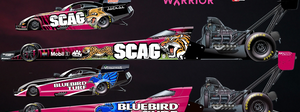
Scag Racing goes pink at NHRA Midwest Nationals for Breast Cancer Awareness
-
NHRA announces new media rights agreements with FOX Sports, The CW Network, and FloSports
-
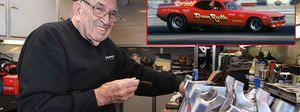
Funny Car legend Jim Dunn to be inducted into West Coast Motorsports Hall of Fame
-
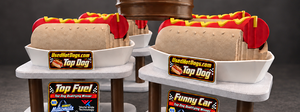
“Top Dog” competition highlights Friday night qualifying in St. Louis
-
NAPA Auto Parts NHRA Midwest Nationals set for football-adjacent FOX broadcast
-
Sellout crowd at debut NHRA Nationals at The Rock
- ad
-
Last Driver Standing low qualifier bonus coming to NHRA Nationals at The Rock
-
September issue of National Dragster jam-packed with NHRA race results
-
Rockingham NitroFest fan event kicks off NHRA Nationals at The Rock
-
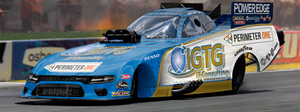
IGTG, Perimeter.One join Paul Lee Racing as primary sponsor at The Rock
-
Langdon, Vandergriff, Coughlin, and Hall claim inaugural Michigan titles
Legendary world championship-winning nitro tuner Leonard Hughes passes away
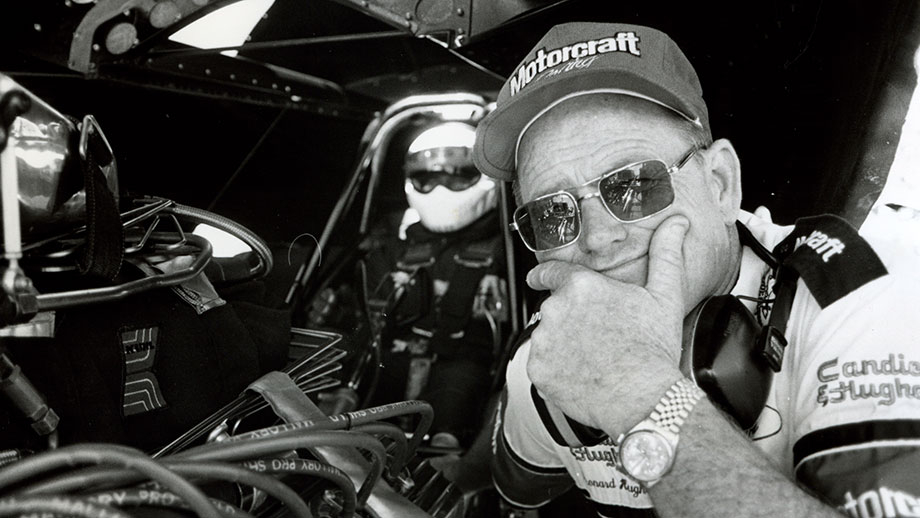
Leonard Hughes, the brilliant tuning mind and counterpart to partner Paul Candies’ deep pockets on the successful Candies & Hughes team that often dominated Top Fuel and Funny Car racing in the 1970s and ‘80s, died Oct. 14.
Both Candies and Hughes were racers long before they partnered in 1964, and it was in 1970 when they made their first big splash, winning Funny Car at the Gatornationals with Hughes also behind the wheel, winning the historic first all-team final against Larry Reyes, driving the second team car.
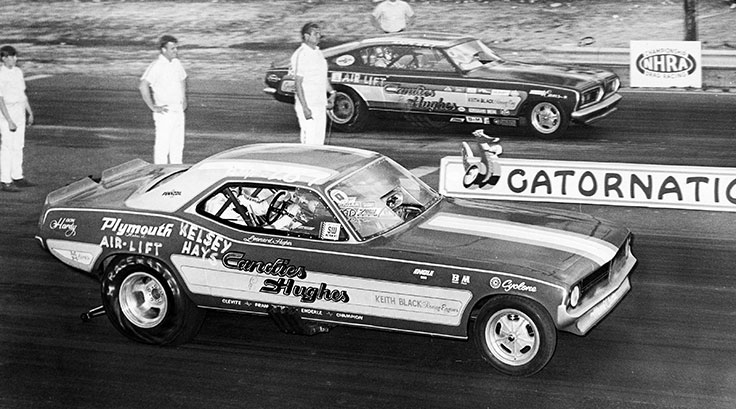
Hughes followed the Gatornationals win with a victory at the prestigious Super Stock Nationals in Pennsylvania and the No.1 qualifying spot in Indy, then won the Summernationals the following year. Hughes reached one more final, at the 1972 Springnationals, where he lost to Ed McCulloch, before transitioning out of the cockpit.
Hughes was replaced by former Ramchargers shoe Leroy Goldstein, who had begun driving a second C&H car earlier that year and the team’s new Top Fueler. Goldstein also got the Candies & Hughes team on the NHRA scoreboard again with his Funny Car win at the 1973 Summernationals – the same race where new C&H Top Fuel driver Bill Wiggington set the national record at 6.03 -- before leaving the team at the end of that season.
Despite their flopper successes, the team switched exclusively to Top Fuel in 1974. Dave Settles replaced Wiggington and carried the team to the Division 4 championship, its first Top Fuel victory, at the Gatornationals, and a second-place championship finish behind Gary Beck. Settles left the team at the end of 1975 to build an A/Fuel Dragster for himself,
Richard Tharp’s driving performance in the Carroll Bros. Top Fueler at the 1975 Summernationals caught the eye of Candies, and, with Curt Carroll’s hearty approval, hired Tharp.
“We raced against Leonard and Paul a lot when they were running Funny Cars, so they knew who I was,” said Tharp. “Curt called me and told me that Paul wanted to hire me for 1976 and gave me his blessing; he told me [Candies] was crazy if he didn’t hire me. A few days later, Paul called me, and I was hired, but Curt and I remained good friends.”
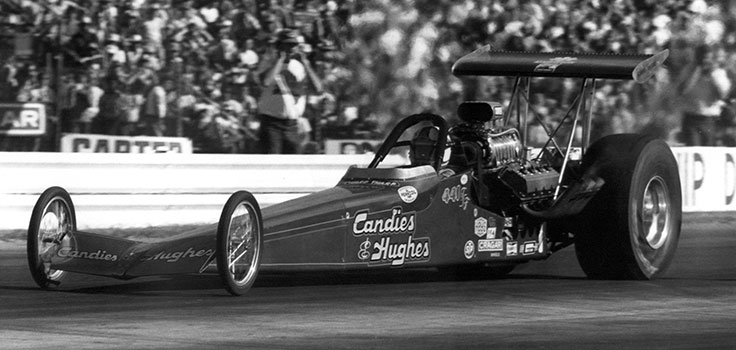
Their first season together couldn’t have gone better. They won the inaugural Cajun Nationals in Baton Rouge, La., then won the Summernationals, runner-upped at Le Grandnational, and won the U.S. Nationals, en route to the championship. They won the Cajun Nationals again the next year and runner-upped at Indy behind Dennis Baca.
In six NHRA seasons and 46 starts with the Candies & Hughes team, Tharp reached nine finals and five winner’s circles, qualified No. 1 seven times, always finished in the top 10, and compiled an impressive 82-46 win-loss record in the face of tough competition with Don Garlits, Shirley Muldowney, and Beck.
Although the jovial Candies and Tharp got along well, Tharp’s after-hours antics didn’t often sit well with the sometimes cantankerous Hughes.
“Leonard was the reason we had so much success on the track, but he was so hard to get along with,” said Tharp. “We clashed big time. Paul and I always got along – still do – but Leonard didn’t like us going out and drinking at night.
After finishing eighth in 1981, the team released Tharp and hired Mark Oswald, plucking him from relative obscurity to drive their car. Oswald and partner Tom Kattelman had been one of their toughest competitors on the IHRA trail but didn’t have many NHRA starts.
"It was it was a good match because me and Tom were very mechanical guys," said Oswald. "We had a speed shop with the race-engine business and everything when we went over there, so we could add something to that team, and Leonard's forte was he was probably one of the best common-sense racers I've ever seen. He very seldom got in trouble because he always knew that he could take what he knew and dabble into other things, and if it didn't pan out, he would go right back to that. He wouldn't get lost, and that was a consistency thing that led to good seasons. He was just a very common-sense, bare-bones racer that was really tough at it. He really knew how to do it."
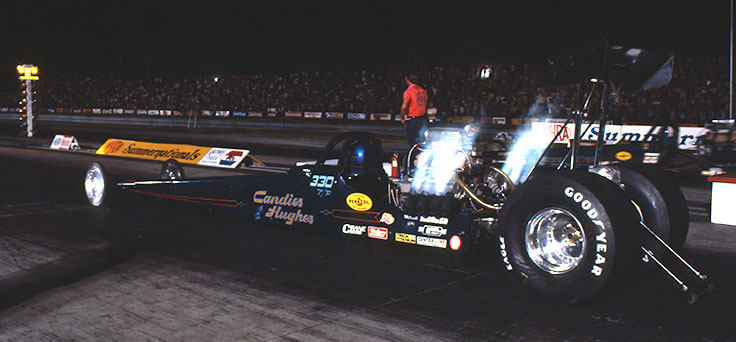
In their first race together, Oswald and Candies & Hughes set the national speed record at the 1982 Winternationals, then went on to victories at the Cajun Nationals and the Summernationals. It was at the Summernationals where Oswald, Candies, and Hughes ran 5.618 to finally displace the 5.63-second national e.t. record held by Don Garlits since the 1975 World Finals, perhaps the longest-lasting national record in the sport's history. They also set the speed record in E-town at 254.23, which they bettered a few months later in Brainerd with a pass of 256.41.
Oswald finished second in the championship hunt that year behind Muldowney, who earned her third title, and, in what seemed like an odd move, the team returned to its Funny Car roots the next season. Some of its top foes no doubt chuckled when the team DNQ’d in its debut at the 1983 Winternationals. The laughing didn’t last long.
After a pair of early runner-ups, Oswald scored his first Funny Car win in Montreal, then scored again at the next race, the Summernationals, en route to a second-place finish (albeit a distant second) behind Frank Hawley and the Chi-Town Hustler team. The team began 1984 with backing from Old Milwaukee beer and reset the national record in Indy (5.69) and scored two wins and a clutch runner-up at the World Finals to hold off Billy Meyer and Kenny Bernstein for the crown. The championship made Candies & Hughes the first team to win NHRA season titles in both nitro classes. The team also won the IHRA Funny Car championship that season for an impressive double.
After a fruitless 1985, the team won three more times in 1986, twice in 1987, and twice in 1988 en route to a trio of second-place finishes (all behind Bernstein). Despite a win and five runner-ups, it slipped to fourth in 1989, a spot it retained in 1990 despite three wins and a pair of runner-ups. All told, Oswald made 28 final-round appearances from 1983 to 1990 before sponsorship woes led to the team’s dissolution. Of the 28 wins by the Candies & Hughes team, Oswald was the driver for 17.
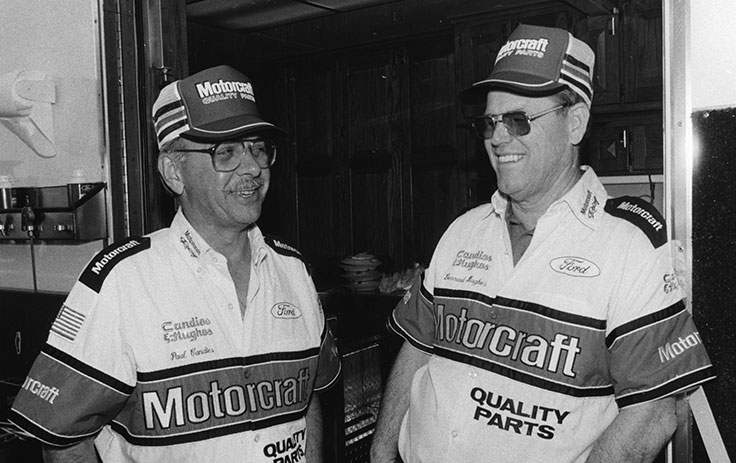
The Candies & Hughes name resurfaced four years later, with sponsorship from R.J. Reynolds’ Camel brand and veteran Gordie Bonin behind the wheel. Hughes had remained in the sport and had worked with Bonin and car owner Leong on the Hawaiian Vacation entry, so when RJR exec T. Wayne Robertson offered the Smokin' Joe’s/Camel deal to Candies & Hughes, Hughes was insistent that Bonin be the driver. “Best, best, best ever deal I've ever had,” said Bonin.
They won twice in 1994 and finished sixth in points but didn’t make the top 10 in 1995, which led to pressure from RJR, according to Bonin. He said that RJR tried to pressure Candies into getting tuning help for Hughes, but Candies stood by his old friend, saying that Hughes didn’t need any help, and the deal ended at the end of that year.
Though they were gone, they were not forgotten, and both were inducted into the International Drag Racing Hall of Fame in 1999.
“I think our ability to work together and think together [was key],” said Candies, who passed away in July 2103. “Leonard was a very, very intelligent mechanic, and my business sense balanced the other side. I was able to keep it funded successfully and act as the go-between for him and the drivers and the rest of the crew. I think those things kept it pretty successful.”