

-
Behind the Scenes with the winners of the 2026 Texas NHRA FallNationals
-
Weekend Rewind: 2026 Texas NHRA FallNationals
-
Five Things We Learned at the Texas NHRA FallNationals

-
After fourteen years, GT Tonglet returns to Pro Stock Motorcycle
-
Forty years later, Beckman has gone from fan to leading the Funny Car field in Dallas
-
-
First look at 2027 Pro Stock combination in Dallas exhibition passes
-
Langdon riding a four-race, 16-round win streak into Countdown's second half

-
Gaige Herrera eyes Pro Stock Motorcycle championship opportunity in Dallas
-
Funny Car’s Austin Prock thinking big for Texas-sized shootout
-
Top Fuel rookie Will Smith looks for dream weekend in Dallas
-
Plourd ready to complete bucket-list challenge with Las Vegas Top Fuel debut
-
From Dearborn to the dragstrip: Ford Racing's story began 125 years ago today
-
Behind the Scenes with the winners of the 2026 NAPA Auto Parts Midwest Nationals
-
Weekend Rewind: 2026 NAPA Auto Parts NHRA Midwest Nationals
-
Saturday in St. Louis: NAPA Auto Parts NHRA Midwest Nationals photo gallery
- ad
-
Could St. Louis bring out the best in Erica Enders once again?
-
Cameron Ferre: Still chasing Top Fuel greatness, just on his own terms
-
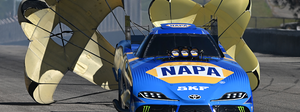
Ron Capps thinking big at NAPA Auto Parts NHRA Midwest Nationals
-
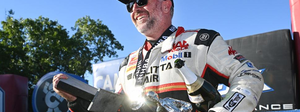
Top Fuel’s Shawn Langdon looking for fourth straight win of 2026
-
Behind the Scenes with the winners of the 2026 NHRA Nationals at The Rock
-
Weekend Rewind: The inaugural NHRA Nationals at the Rock
-
Five Things We Learned in Rockingham
-
New venues like Rockingham bring excitement for old pro Ron Capps
-
That was then, this is now: The Winston Invitational at Rockingham
-
After a near-miss in Michigan, Ingwersen and crew are more inspired than ever
- ad
-
Jordan Vandergriff relishes first opportunity to race at Rockingham Dragway
-
Behind the Scenes with the winners of the 2026 Dodge NHRA Great Lakes Nationals
-
Weekend Rewind: 2026 Dodge NHRA Great Lakes Nationals
-
Five things we learned from the Dodge NHRA Great Lakes Nationals presented by Mopar
-
Vandergriff and crew took aim at No. 1 in challenging Michigan conditions
Could St. Louis bring out the best in Erica Enders once again?
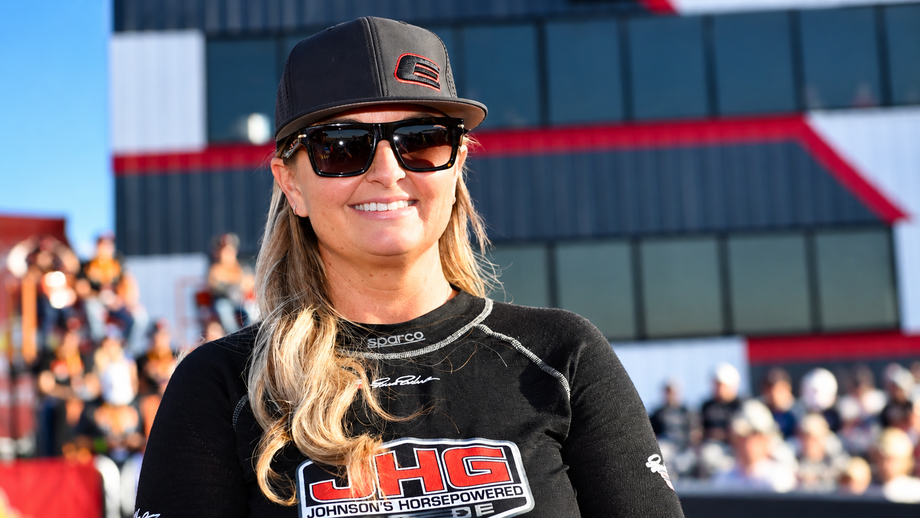
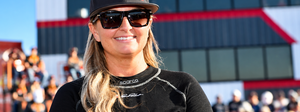
There may be no better place to measure the evolution of Erica Enders than World Wide Technology Raceway. Long before the six NHRA Pro Stock championships, before the 50-plus national event victories and before she became one of the most accomplished drivers in NHRA history, Enders came here as a Sportsman racer. She raced Super Comp. She raced Super Gas. She learned. She won rounds. And in 2004, it was here in St. Louis that Enders announced she would make her professional debut in Pro Stock the following season. More than two decades later, she returns as the winningest NHRA professional driver in the history of the facility with six victories.
“This place means a lot to me because I was a Sportsman racer before I raced Pro Stock,” Enders said. “This is close enough to Texas that we would come around here with Super Comp and Super Gas, and we had some success here.
“And then in 2004, at this race, this is where we made the announcement that I would be driving Pro Stock in 2005 for my Pro debut.
“I’ve grown up racing here, and to be able to come here and have the success that we have had in Pro Stock is really cool.” Some drivers simply seem to find something at certain racetracks. Enders doesn't pretend to know exactly why.
“I just feel like certain tracks are good to certain people,” she said. “You can go through the history of the sport and see that certain drivers win at certain places. Our tracks have always been Houston, Dallas, St. Louis, Indy, Vegas. Those are like strongholds.”
There is another side to that equation. Enders loves Sonoma, for example, but has won there just once during her Pro Stock career. The same is true of Reading, a track and region she loves but where victories have been much harder to come by. St. Louis is different.
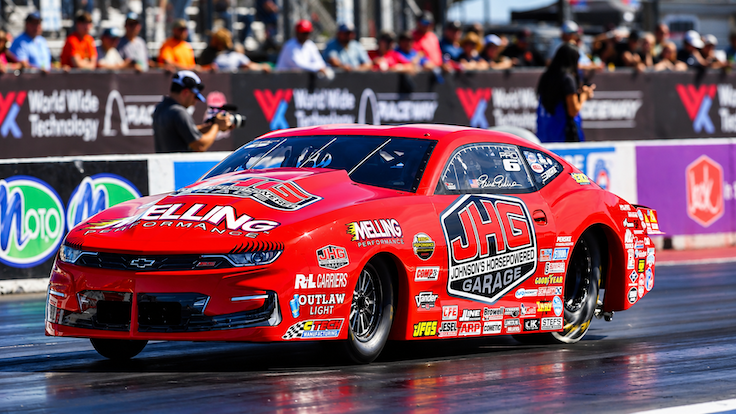
Perhaps it is the track. Perhaps it is familiarity. Her crew chief has roots here. Enders herself raced here long before becoming a professional. Or perhaps it's when St. Louis falls on the NHRA calendar. In the Countdown to the Championship, St. Louis has traditionally been the point at which championship aspirations begin turning into championship realities — or start slipping away. Enders' sister Courtney has a phrase for it.
“Everything changes at the Gateway.”
That line carries considerably more weight for Enders in 2026. This has not been the season she expected. She arrived in St. Louis still searching for her first Wally of the year, an almost unimaginable position for a driver and team accustomed to competing for race wins and championships.
“I think it would be really fitting to have it happen here,” Enders said. But perhaps the more interesting question isn't whether St. Louis can produce another victory. It's what the Erica Enders who has won here more than any other NHRA professional driver has learned from the seasons when winning didn't come easily.
Learning to love pressure
Enders has been driving a Pro Stock car for 22 years, yet she insists she is still learning.
“Pro Stock is very challenging to drive,” she said. “I’ve been doing it for 22 years, and I still learn every run. I try to always have my eyes and ears open, and I’m taking everything in. I think that’s part of where you’re striving to be the best — you just continue to evolve with the car.” That experience has created an almost sensory connection between Enders and her race car. Before seeing a time slip, she generally knows roughly what happened.
“When I unbuckle, I have a feeling of the vicinity of what our 60-foot will be, and I can probably tell you within a hundredth-and-a-half of what my reaction time was,” she said. “I always play this game with myself: ‘What do you think you were on the Tree?’
“I might be pretty off on our E.T. at the top end, but I can tell you the difference between going .970 down low and .990. You can just feel it.”
Enders jokingly calls herself the team's “human computer.” The data recorder can tell crew chiefs what happened. Enders can sometimes tell them something the sensors can't.
“I’ll come back and tell them what I felt, what I heard, what’s happening here, what’s happening there,” she said. “We can tell them stuff that the computer can’t.
“I might not know exactly what it is, but I know when it’s different, or I know when it’s not right.” Thousands of runs have built that database. So has failure.
Enders knows what a wounded engine sounds and feels like. When the engine has lost a rod, a valve, or a piston. She knows when something isn't behaving as it normally does. That understanding wasn't there when she was a young Sportsman racer arriving at St. Louis simply thrilled to have a race car waiting for her. The same evolution has occurred in how she handles pressure.
“When I first started racing Pro Stock, my first final round, I red-lit,” Enders said. “You learn to make yourself love pressure and understand that it’s actually a blessing to be in those situations.
“I had to mind-trick myself into that.”
She compares it to having the ball with seconds left on the clock. An athlete doesn't merely accept that situation. The great ones want it.
“You better want the ball,” she said. “You know that you’re going to sink the shot better than anybody else.” Enders has reached the point where she would almost rather see one of the sport's toughest opponents in the other lane early in eliminations because the challenge immediately demands her best. Pressure is no longer something to survive. It is something she can use.
Stronger isn't always tougher
That brings Enders to a more difficult lesson. Ask whether the Erica Enders of 2026 is trying to become stronger, tougher or perhaps better at forgiving herself, and she laughs at the idea that she needs any more toughness.
“I don’t know if I can be any stronger or tougher after the stuff that we’ve been through,” she said. “But I also don’t want to challenge the universe.”
Enders compares the last 18 months with one of the most difficult periods of her career, the 2016 season that included a manufacturer change and Pro Stock's transition from carburetors to electronic fuel injection.
“These last 18 months, I feel like, are worse than that because we shouldn’t be in this situation,” she said. “I’m not saying we should go out and win races and championships, but we’re better than the scorecard that we’re turning in, and it’s super frustrating for all of us.” That frustration doesn't remain inside the cockpit. It spreads through a race team.
“When things start going that way, it takes a hit at your confidence — and not just mine, my crew members, too,” Enders said. Then came one of Enders' most revealing descriptions of life inside a team accustomed to winning.
“Success and wins are a great deodorant for anything else that’s going on,” she said. “So when you’re working your ass off and you’re in the trenches taking grenades and you’re not winning on top of it, it’s just like, damn, it sucks.”
There may be the real test of a champion. Winning six times at St. Louis proves Enders knows how to win here. The last two seasons have tested what she does when she doesn't. And the next evolution of Erica Enders might have less to do with becoming tougher behind the wheel than becoming more forgiving away from it.
She admits she's a people pleaser. She cares deeply about her crew, her partners and the people around the team. As her role at Elite Motorsports has expanded, she has also learned how much work takes place beyond driving the car.
“Racing is what we get to do for what we do,” Enders said. “We work our butts off to be able to have fun with this.” That responsibility also makes it difficult to ignore criticism.
“I’m still working on understanding that you cannot make everyone happy,” Enders said. “The sooner I realize that other people’s opinions of me don’t matter, and that I can’t make everyone be on our side, like us or root for us, the better off I’ll be.”
It may be an unusual admission from someone whose career has been built on extraordinary competitiveness. But maybe that's the lesson. Enders doesn't need to care less about winning. She may simply need to give herself permission to carry less of everything else. Twenty-two years after announcing her Pro Stock future at this racetrack, Enders is still evolving. The young Sportsman racer who once arrived here and simply climbed into the race car eventually became a six-time world champion capable of feeling hundredths of a second through the seat.
She learned the race car. She learned about pressure. She learned how to win. Now, after one of the most difficult stretches of her career, perhaps the next lesson is learning that every bad run, every difficult season and every outside opinion doesn't have to come home with her. And if Erica Enders is going to begin writing another winning chapter, there might be no more appropriate place to start.
After all, everything changes at the Gateway.