

-
NHRA stars joined to support lifesaving B.R.A.K.E.S. teen driver training program
-
Gadson’s Big Brothers Big Sisters mission makes an impact at Texas Motorplex

-
NHRA brings 2026 SEMA Show to the world with streaming interviews all week
-
NHRA Mission Foods Awards Ceremony returns to Pechanga Resort Casino
-
NHRA Breakfast at 2026 SEMA Show focuses on epic Funny Car championship battle
-
-
Aaron Stanfield completes Top Fuel licensing runs at Texas Motorplex test
-
Unofficial Mission Foods points standings
-
Texas NHRA FallNationals Sunday preview
-
After fourteen years, GT Tonglet returns to Pro Stock Motorcycle
-
RAD Torque Systems to back Joey Gladstone for full 2027 season aboard MSR Buell

-
First look at 2027 Pro Stock combination in Dallas exhibition passes
-
A galaxy of NHRA superstars shined at annual FallNationals Pre-Stage FanFest
-
JEGS Allstars feted at pre-event breakfast at Texas NHRA FallNationals
-
Funny Car’s Terry Haddock looking to make an impact in Countdown
-
October issue of National Dragster packed with championship points action
- ad
-
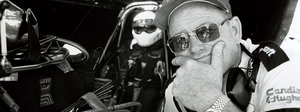
Legendary world championship-winning nitro tuner Leonard Hughes passes away
-
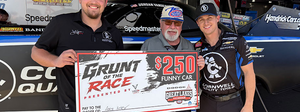
VizionOne's Grunt of the Race program awards NHRA nitro crewmembers
-
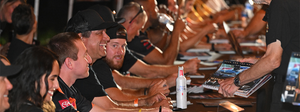
Texas FallNationals Fan Fest will deliver a galaxy of NHRA stars
-
NHRA Countdown to the Championship hits halfway point in dramatic fashion
-
2026 NHRA Rookie of the Year candidates announced
-
Teams of Langdon, Beckman, Anderson, Angie Smith lead Crew of the Year battle
-
JEGS Allstars preview: A closer look at each of the contenders in each class
-
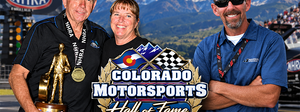
Bandimere, Whiteleys to be inducted into Colorado Motorsports Hall of Fame
-
Drag Racing Association of Women opens applications for new board members
-
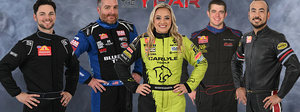
Rating the challengers for the 2026 NHRA Rookie of the Year award
- ad
-
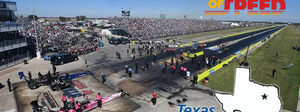
Stampede of Speed brings Texas-sized showdown to Texas Motorplex
-
Watch the Division 3 Lucas Oil Series race from St. Louis for free on NHRA.tv
-
How Kalitta Motorsports elevates its hospitality experience with Deecell
-
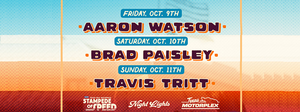
Blockbuster stars set for Stampede of Speed Texas Music Festival
-
The faces of prerace: See the Sunday intensity building at the Napa Auto Parts NHRA Midwest Nationals
NHRA's Top 75 Moments, No. 3: Don Garlits scores first rear-engine Top Fuel win
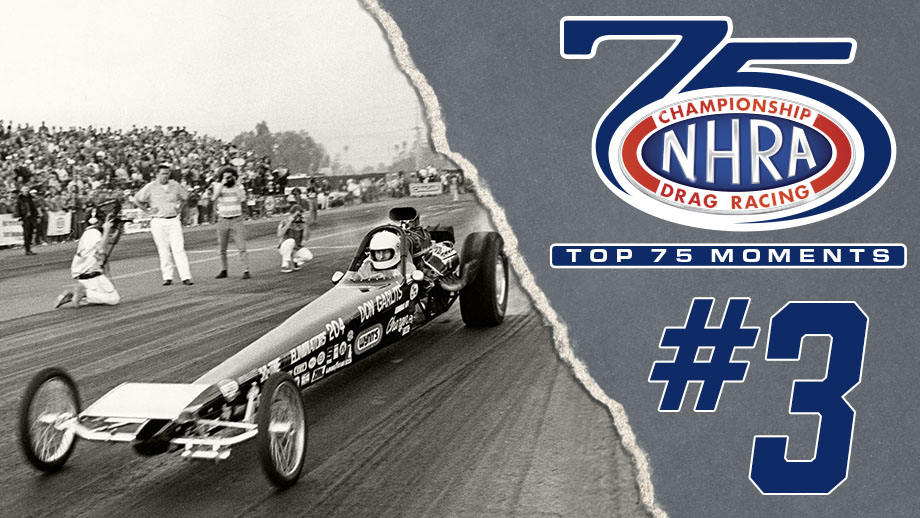
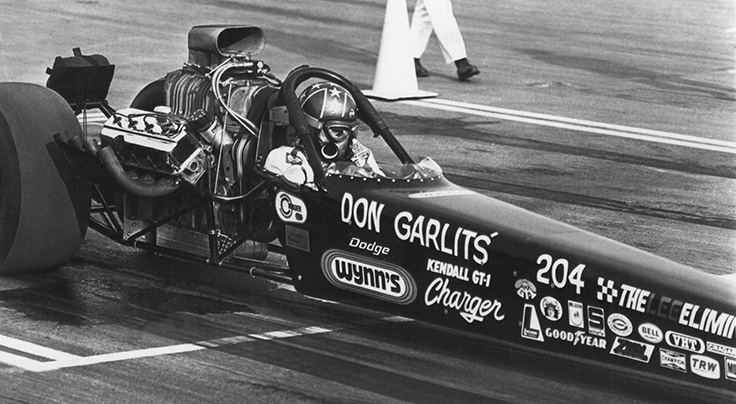
For more than 50 years, the only design in Top Fuel has the driver sitting in front of the engine, but it wasn’t always that way until Don Garlits proved the design not only safer but faster in 1971.
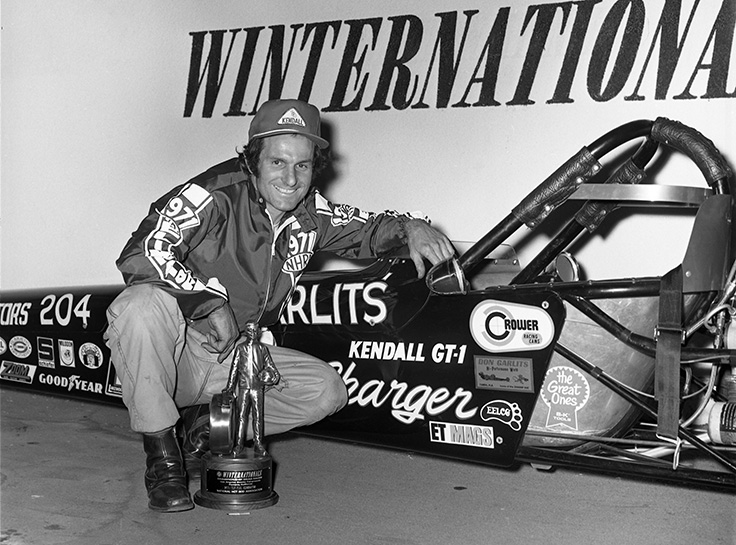
After a 1970 transmission explosion in his front-engine Swamp Rat 13 severed half of his right foot, Garlits perfected a rear-engine dragster, Swamp Rat 14, and won the 1971 NHRA Winternationals in its debut over a field full of traditional front-engine cars. Within two years, every Top Fuel dragster had the engine behind the driver.
The car was physically built in late 1970 but mentally assembled by Garlits from his bed at Pacific Coast Hospital in Long Beach, Calif., in the wake of the March 8, 1970, transmission explosion that cut the unlucky Swamp Rat 13 (and Garlits' right foot) in two on the starting line at Southern California's Lions Drag Strip.
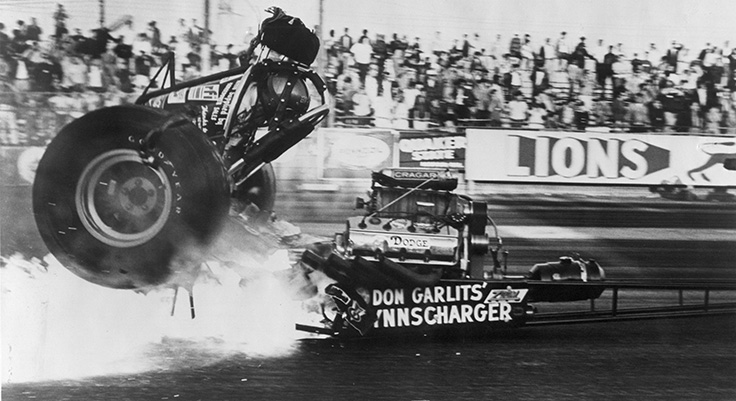
Between watching episodes of Star Trek with Tom McEwen, Garlits logically set out primarily to prevent a similar future accident more than he did to revolutionize the class, then ended up winning in the car’s national event debut less than a year later. The legend and imagery of that tale are just so great that it has become mythical in our sport, and the accomplishment is included almost anytime he is lauded.
That a need existed for a new paradigm in Top Fuel was evident in the late 1960s. Although teams were still making performance improvements with the front-engine slingshot design that had been the de facto norm since the mid-1950s, injuries and even death were a constant companion as engines, clutches, and bellhousings, pushed to and beyond their limits, began to give out with an alarming frequency, claiming heroes like Mike Sorokin and John Mulligan, and sending Jim Nicoll on a terrifying tumble alongside Don Prudhomme after a clutch explosion in the 1970 Nationals final.
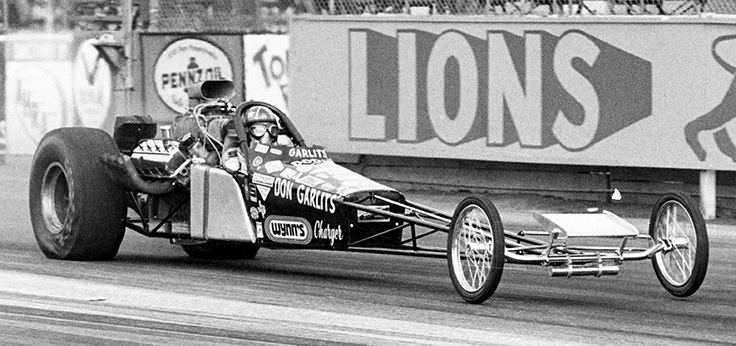
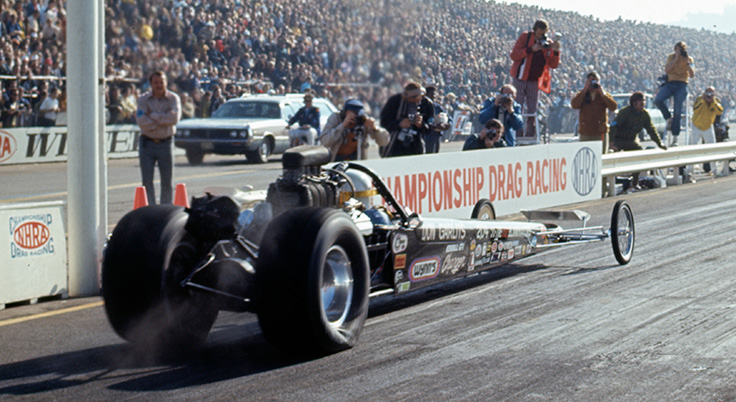
Rear-engined cars had been tried before, but with little success. Anyone who snickered — and there were quite a few — when Garlits unloaded Swamp Rat 14 at Lions for AHRA’s 1971 season-opening Grand American event Jan. 8-10 were at least partially silenced as he clocked a 6.60 — just .05-second off the track record — and went on to score runner-up honors behind “Mr. C,” Gary Cochran, and his slingshot entry. A week later, Garlits was again runner-up, this time at the PDA event just down the 405 freeway at Orange County Int'l Raceway and again to Cochran’s front-engine mount.
Garlits didn’t initially have the quickest machine in Pomona, where the tight 32-car field was separated by just .33 seconds. Garlits was just the No. 9 qualifier with a mid-6.80 pass a tenth and a half behind the 6.70 registered by Norm Wilcox in "Terrible Ted" Gotelli's Northern California-based entry.
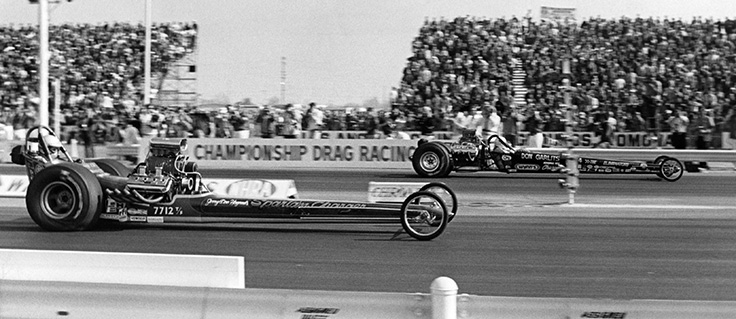
After a middling 6.85 win over Tommy Allen in round one, Garlits had low e.t. of the next three rounds, running a pair of 6.72s to beat John Nichols in Jerry Dee Hagood's Spartan Charger and local favorite Carl Olson, and then a 6.70 to beat Jim Dunn in the semifinals. Garlits’ final-round opponent, Kenny Safford in Larry Bowers’ car, was unable to make the call after a clutch swap between rounds, and Garlits, perhaps loaded for bear to put an exclamation point on his win or just out to put on a show, smoked his way to a 7.03 on a solo pass.
After defeating the NHRA Winternationals field with precision, Garlits drove back east to win the IHRA Winternationals, then back west to win the fabled March Meet. After that, there wasn’t much for most of the remaining detractors to say except, “How soon can I get one?”
See the complete to-date list of moments on the Top 75 Moments homepage