

-
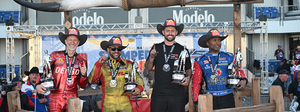
Brown, Todd, Glenn, Smith collect huge Texas NHRA FallNationals victories
-
Sunday News and Notes from the Texas NHRA FallNationals
-
Glenn sets Pro Stock record; Langdon, Beckman, and Herrera qualify No. 1
-
Ron Capps rides out wild blower explosion at Texas NHRA FallNationals
-
Saturday News and Notes from the Texas NHRA FallNationals
-
-
Texas NHRA FallNationals Saturday preview
-
Langdon, Beckman, G. Stanfield, Herrera wrangle provisional No. 1 spots in Dallas
-
Friday News and Notes from the Texas NHRA FallNationals
-
Texas NHRA FallNationals Friday preview
-
Five things we learned at the NAPA Auto Parts NHRA Midwest Nationals
-
Langdon, Prock, A. Stanfield, Herrera win NAPA Auto Parts NHRA Midwest Nationals
-
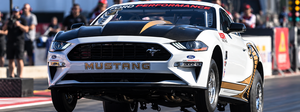
Jonathan Allegrucci crowned Flexjet NHRA Factory Stock Showdown world champion
-
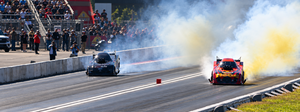
Round 1 pedalfest: Spencer Hyde outlasts Chad Green in wild Funny Car duel
-
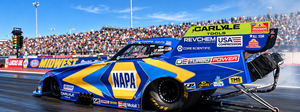
Sunday News and Notes from the NAPA Auto Parts NHRA Midwest Nationals
-
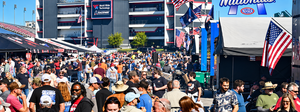
Sunday is the gateway to the Championship at the NAPA Auto Parts NHRA Midwest Nationals
- ad
-
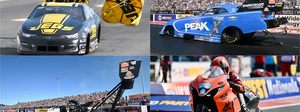
Beckman, Langdon, T. Coughlin and Herrera secure No. 1 spots in front of St. Louis sellout
-
Saturday News and Notes from the NAPA Auto Parts NHRA Midwest Nationals
-
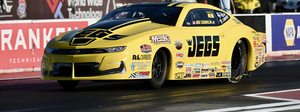
Lee Hartman's Dodge makes history with first Wally, No. 1 qualifier and quickest Flexjet Factory Stock Showdown pass—Ever!
-
NAPA Auto Parts NHRA Midwest Nationals —Saturday preview
-
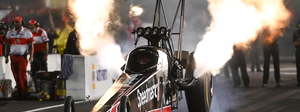
Date night at the dragstrip—Friday night under the lights in St. Louis photo gallery
-
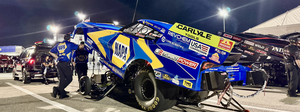
Friday News and Notes from the NAPA Auto Parts NHRA Midwest Nationals
-
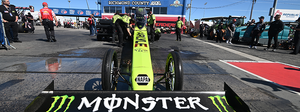
Sunday News and Notes from the NHRA Nationals at The Rock
-
NHRA Nationals at The Rock Sunday preview
-
Capps, Kalitta, Hartford, Smith hold onto Friday qualifying leads in Rockingham
-
Saturday News and Notes from the NHRA Nationals at The Rock
- ad
-
NHRA Nationals at The Rock Saturday preview
-
Kalitta, Capps, Hartford, Smith qualify No. 1 on Friday at The Rock
-
Friday News and Notes from the NHRA Nationals at The Rock
-
NHRA Nationals at The Rock Friday preview
-
Langdon, Vandergriff, Coughlin, and Hall claim inaugural Michigan titles
Five things we learned at the NAPA Auto Parts NHRA Midwest Nationals
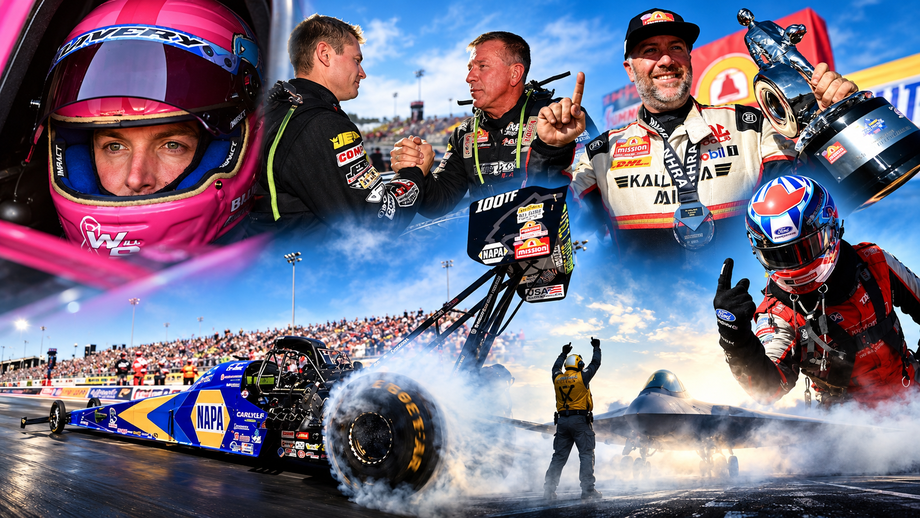
The 15th annual NAPA Auto Parts NHRA Midwest Nationals arrived at World Wide Technology Raceway as the midpoint of the six-race Countdown to the Championship, and by the time the final pair of cars went down the track Sunday, the championship picture had changed again.
Shawn Langdon continued one of the most impressive winning streaks of his career, Austin Prock put himself back into the Funny Car championship conversation, Elite Motorsports continued a remarkable postseason resurgence, and Will Smith proved he's a man with a Wally out there waiting for him to win it.
The weekend also provided a reminder that there is something different about this place and the people who live and build here. St. Louis has spent generations creating cars, chromoly chassis, airplanes, and even spacecraft. From Corvettes to Mercury capsules to modern F-15 fighter jets, this is a region whose industrial history has always been connected to making things lighter, stronger, faster, and better.
Here are five (six, actually) things we learned at the NAPA Auto Parts NHRA Midwest Nationals.
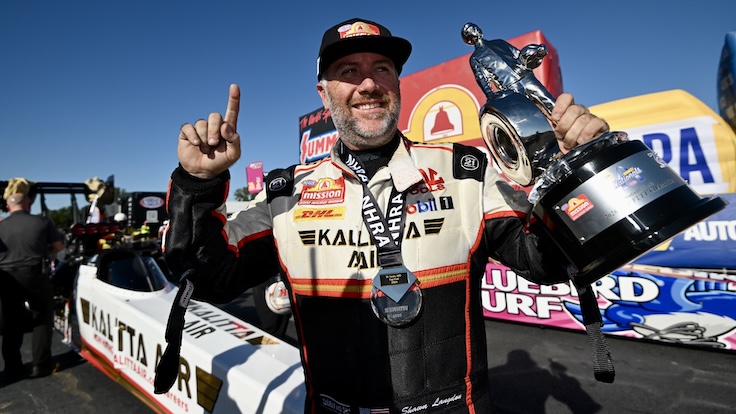
1. Shawn Langdon Isn't Just Leading the championship, He's Taking Control of It
Four races. Four victories.
After winning the Cornwell Quality Tools NHRA U.S. Nationals to close the regular season, Shawn Langdon has swept the first three races of the Countdown to the Championship, winning in Martin, Rockingham, and now St. Louis.
Langdon qualified No. 1 at World Wide Technology Raceway and then worked his way through Tony Schumacher, Leah Pruett, and Justin Ashley before defeating first-time finalist Will Smith. His 3.732-second pass at 335.90 mph in the final delivered his eighth victory of the season and 30th of his career. Along the way, Langdon also reset the track speed record at 341.68 mph.
The significance is larger than the four consecutive Wallys. Langdon and the Kalitta Motorsports team are producing their best racing at precisely the point in the season when mistakes become increasingly expensive. Three Countdown races remain, so nothing in Top Fuel is settled. But everyone chasing the championship now has two jobs: win races and somehow stop Langdon from winning them.
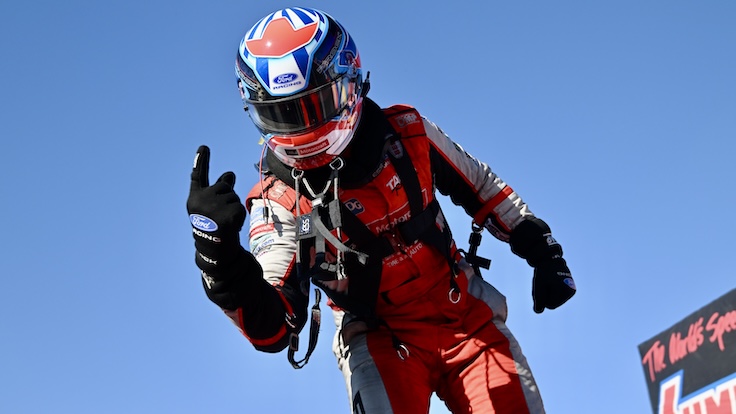
2. Austin Prock Put Himself Back Into the Fight
Austin Prock didn't simply win St. Louis. Look at who he had to beat to do it: Ron Capps, J.R. Todd, No. 1 qualifier Jack Beckman, then Jordan Vandergriff in the final.
Prock entered Sunday needing a big day, and that's exactly what the reigning Funny Car world champion produced. His 3.909 at 332.84 mph, combined with a .045 reaction time, finished off Vandergriff in the final and gave Prock his second victory of the season.
Perhaps more importantly, it kept his championship hopes alive. Every round on Sunday carried championship implications, and Prock responded by eliminating contender after contender. The performance was a reminder of how quickly the Countdown can change. One great Sunday can transform the mathematics, the momentum, and the psychology of a championship race.
Prock departed St. Louis still facing a significant challenge, but with three races remaining, the defending champion is very much part of the conversation.
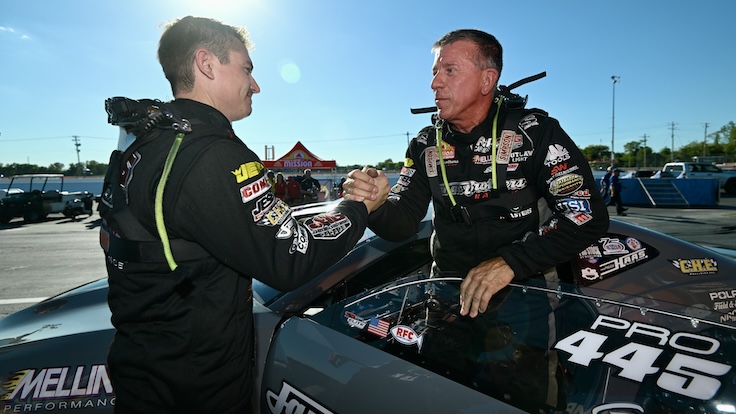
3. Elite Motorsports has Reinvented Itself at Exactly the Right Time
Three Countdown races. Three Elite Motorsports victories. Troy Coughlin Jr. won in Martin, Greg Stanfield won in Rockingham, then Aaron Stanfield won in St. Louis. And the latest Elite win came from a son beating his father.
The all-Stanfield final was decided at the starting line, where Greg ran the quicker elapsed time, 6.547 to Aaron's 6.556, but Aaron's outstanding .018 reaction time provided enough advantage to produce a holeshot victory by approximately one-thousandth of a second. It was an extraordinary conclusion to another strong weekend for Elite Motorsports.
Earlier in the season, one of the major Pro Stock questions was what had happened to the Elite organization that had become accustomed to dominating the category. The Countdown has provided an answer.
Elite has seemingly rediscovered its identity precisely when championships are decided. Three different drivers have now delivered victories in the first three playoff races, while Greg Stanfield continues to lead the championship. The Countdown is effectively a six-race season within the season, and Elite Motorsports has arrived for it looking very much like Elite Motorsports again.
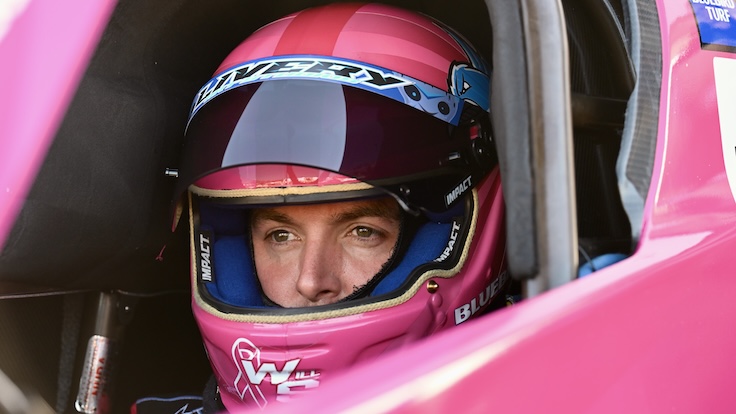
4. Will Smith is a Wally Winner Waiting to Happen
Will Smith didn’t leave World Wide Technology Raceway with the Top Fuel Wally, but his first career final-round appearance felt less like a surprise than a preview. Smith had to earn his way there, surviving a side of the ladder loaded with proven talent and then facing Shawn Reed (who is on his own tear) in the semifinals. With a trip to the final on the line, Smith delivered when it mattered, cutting the better light and advancing to face championship leader Shawn Langdon.
Langdon ultimately stopped the Cinderella run, but Smith showed that he belongs in those moments. Getting to a first final is one thing, getting there by beating established Top Fuel racers while maintaining your composure as the pressure builds is another. Smith now knows what an NHRA final round feels like. More importantly, everyone else knows he can get there. The first Wally suddenly feels like a matter of when, not if.
5. St. Louis is a City of Building Speed
Spend enough time in St. Louis and eventually you begin to notice this region has produced an extraordinary number of fast doorslammers, chassis builders, fabricators, and racers. This is a city that has spent more than a century building things that move—fast. Trains and automobiles were a huge part of that original story, and race car fabrication still is, but why?
Ford, Dodge, Plymouth, and General Motors all operated major assembly plants in the region after World War II, and Chevrolet moved Corvette production from Flint, Mich., to St. Louis at the end of 1953. For nearly three decades, America's sports car was a St. Louis product. In fact, the two big-block, four-speed Corvettes of Johnny Diekemain and Brett Saurbaugh that ranin the Stock eliminator final this weekend were both originally built here.
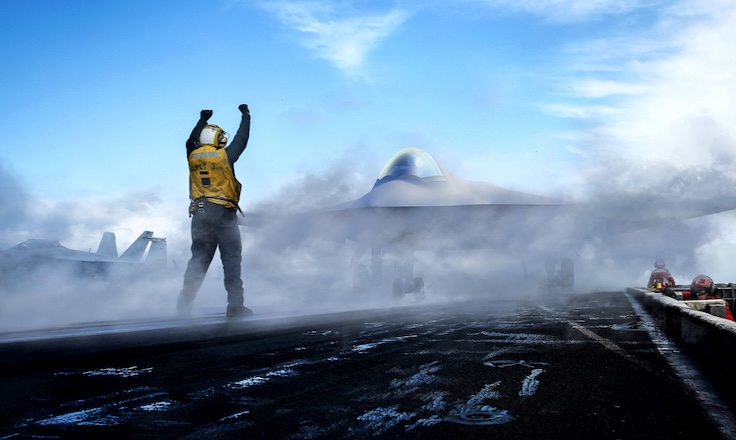
But St. Louis didn't stop at automobiles. McDonnell Aircraft grew into one of America's most important military-aircraft manufacturers from its St. Louis base. Among the aircraft associated with the St. Louis operation was the legendary F-4 Phantom II, a Mach 2 fighter that served the U.S. Navy, Marine Corps, and Air Force and became one of the most recognizable American military aircraft of the jet age. The aerospace lineage continued with the F-15 Eagle and, following the merger that created McDonnell Douglas, the F/A-18 Hornet. And St. Louis didn't just help America fly; it helped America reach space.
NASA selected McDonnell Aircraft as the prime contractor for Project Mercury, and the spacecraft that carried America's first astronauts into orbit around the earth were built in St. Louis. Alan Shepard's Freedom 7 and John Glenn's Friendship 7 came from the Mercury program developed and manufactured here.
Think about the scope of that manufacturing history.
At various points, St. Louis was building Corvettes, Impalas, and 426 Hemi cars while its aerospace industry was producing supersonic military aircraft and spacecraft that would carry human beings beyond the atmosphere. And that history isn't over.
Today, Boeing's St. Louis-area operations remain a major center of American military aviation. The region is involved with the F-15EX Eagle II, T-7A Red Hawk, and MQ-25 Stingray unmanned aerial-refueling aircraft, along with precision weapons and advanced development programs.
Boeing is also investing $1.8 billion in an advanced St. Louis manufacturing facility as the region moves into another generation of combat-aircraft development. St. Louis is central to the Air Force's new F-47 sixth-generation fighter program, and Boeing was recently selected to design and build the Navy's sixth-generation F/A-XX fighter. In other words, St. Louis isn't simply a place that used to build extraordinary machines, it still does. Perhaps that's why St. Louis has an uncanny amount of 4130 chromoly tubing available through multiple manufacturing sources, and distributors who keep this critical race car material in stock at all times. That industrial story helps put the racing industry surrounding World Wide Technology Raceway into perspective.
BONUS: St. Louis Fans Show Up
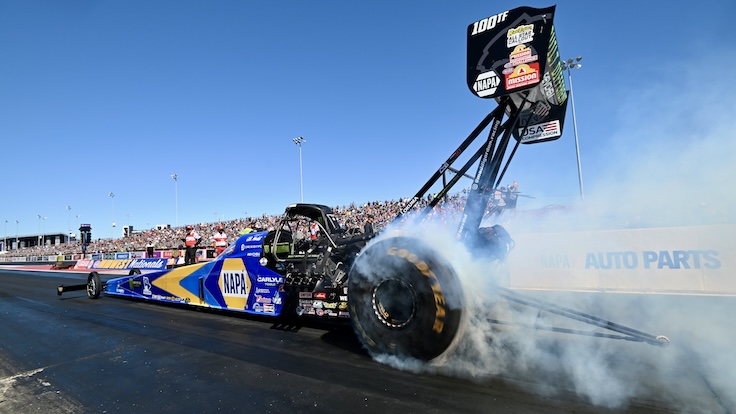
Six consecutive Saturday sellouts at World Wide Technology Raceway. At some point, that stops being a streak and starts becoming part of the identity of the event. Saturday's capacity crowd at World Wide Technology Raceway marked the sixth consecutive Saturday sellout for the NAPA Auto Parts NHRA Midwest Nationals. It was also NHRA's 11th sellout of the 2026 season and third consecutive Saturday sellout during the Countdown to the Championship.
And those fans were rewarded. They watched Langdon continue an extraordinary winning streak. They saw Prock fight his way back into championship contention. They witnessed a father and son decide a Pro Stock final by roughly a thousandth of a second and Herrera extend an incredible St. Louis winning streak.
They watched Lee Hartman reset the Flexjet NHRA Factory Stock record and witnessed history as Chris King made the first 5.50-second run in NHRA Pro Mod competition. They also saw Jonathan Allegrucci secure the Flexjet NHRA Factory Stock Showdown world championship and then finish his championship weekend in the winner's circle. There are places where NHRA brings a race. St. Louis increasingly feels like a place where the race belongs to the community.
Six consecutive Saturday sellouts make that point crystal clear, especially in the year of the diamond Wally.