

-
Behind the Scenes with the winners of the 2026 Texas NHRA FallNationals
-
Weekend Rewind: 2026 Texas NHRA FallNationals
-
Five Things We Learned at the Texas NHRA FallNationals
-
After fourteen years, GT Tonglet returns to Pro Stock Motorcycle
-
Forty years later, Beckman has gone from fan to leading the Funny Car field in Dallas
-
-
First look at 2027 Pro Stock combination in Dallas exhibition passes
-
Langdon riding a four-race, 16-round win streak into Countdown's second half
-
Gaige Herrera eyes Pro Stock Motorcycle championship opportunity in Dallas
-
Funny Car’s Austin Prock thinking big for Texas-sized shootout
-
Top Fuel rookie Will Smith looks for dream weekend in Dallas
-
Plourd ready to complete bucket-list challenge with Las Vegas Top Fuel debut
-
From Dearborn to the dragstrip: Ford Racing's story began 125 years ago today
-
Behind the Scenes with the winners of the 2026 NAPA Auto Parts Midwest Nationals
-
Weekend Rewind: 2026 NAPA Auto Parts NHRA Midwest Nationals
-
Saturday in St. Louis: NAPA Auto Parts NHRA Midwest Nationals photo gallery
- ad
-
Could St. Louis bring out the best in Erica Enders once again?

-
Cameron Ferre: Still chasing Top Fuel greatness, just on his own terms
-
Ron Capps thinking big at NAPA Auto Parts NHRA Midwest Nationals
-
Top Fuel’s Shawn Langdon looking for fourth straight win of 2026
-
Behind the Scenes with the winners of the 2026 NHRA Nationals at The Rock
-
Weekend Rewind: The inaugural NHRA Nationals at the Rock
-
Five Things We Learned in Rockingham
-
New venues like Rockingham bring excitement for old pro Ron Capps
-
That was then, this is now: The Winston Invitational at Rockingham
-
After a near-miss in Michigan, Ingwersen and crew are more inspired than ever
- ad
-
Jordan Vandergriff relishes first opportunity to race at Rockingham Dragway
-
Behind the Scenes with the winners of the 2026 Dodge NHRA Great Lakes Nationals
-
Weekend Rewind: 2026 Dodge NHRA Great Lakes Nationals
-
Five things we learned from the Dodge NHRA Great Lakes Nationals presented by Mopar
-
Vandergriff and crew took aim at No. 1 in challenging Michigan conditions
The King, the Hemi, and the NHRA hat: 60 years ago at the Daytona 500
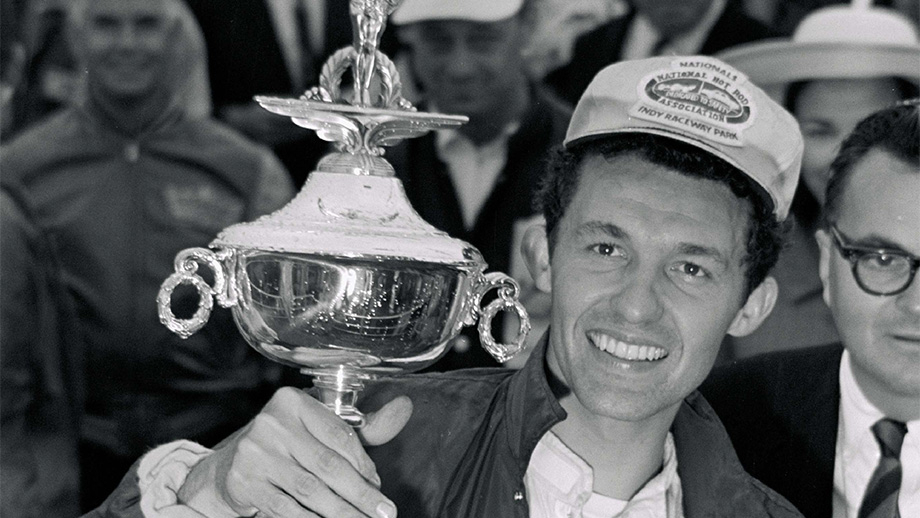
See that kid in the winner's circle?
See that smile?
See what his hat says?
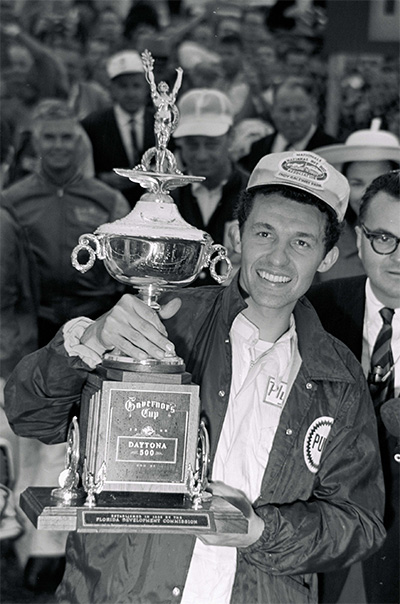
That's Richard Petty, standing in the winner's circle of the 1966 Daytona 500 with an NHRA hat on.
Yup, it's true. After Petty was outlawed from NASCAR competition because of his 1964 success with the 426 Hemi, and spending the 1965 race season in a Hemi-powered drag car, he returned to the tri-oval to dominate Daytona once again. The hat was a message to someone at the time, but 60 years later, it gives context to Tony Stewart's return to Daytona after racing in NHRA.
Origins of Speed
See, before NASCAR, before NHRA, and before the tri-oval rose out of the Florida sand, there were hot rodders chasing speed as the only metric that mattered.
One of them was Wally Parks, timing runs on dry lakes, believing organized racing could legitimize horsepower and protect the culture that built it. Another was Bill France Sr., running flat-out along the tide line of Daytona Beach, turning raw speed into spectacle and sanctioning.
These men knew each other. Parks covered NASCAR races in the pages of Hot Rod magazine and raced the Daytona beach himself in 1957, winning his category when the Superspeedway was still a sketch in France’s imagination. These were not separate tribes. Both men spoke the language of speed.
Sunday Win. Monday Sale.
The legacy of the 426 Hemi began in the early 1960s, when Detroit used horsepower as marketing currency. Win on Sunday. Sell on Monday. With Pontiac and Ford dominating the horsepower wars in 1963, Chevrolet quietly developed a new racing engine under corporate restrictions, the so-called “Mystery Motor.” This was the 427-cid engine that would evolve into the big-block Chevrolet. Long term, it became legendary. But in its first race, it stumbled.
Chrysler’s engineers — hot rodders inside an automaker — studied that blueprint. Their wedge-head 413 and 426-cid engines couldn’t breathe well enough to win at the Superspeedways. So for 1964, they resurrected the exotic hemispherical combustion chamber of their previous V-8 and bolted it in on top of their new deep-skirt tall-deck big-block. The result was the 426 Hemi — hemispherical combustion chambers, enormous valves, and airflow that changed everything.
Built for dragstrips across America and the banks of Daytona, the sacred geometry that powers every modern NHRA Top Fuel and Funny Car traces directly back to that engine. In 1964, the Hemi dominated the Daytona 500 and the NHRA U.S. Nationals so decisively that Ford accelerated development of its own radical 427 single-overhead cam (SOHC) engine. Chrysler, in turn, threatened a dual-overhead-cam “Doomsday” Hemi.
NASCAR responded with a rule: no non-production engines allowed. If it wasn’t available in a car sold to the public, it couldn’t race. The Hemi was outlawed in NASCAR for 1965, and so was Petty.
Drag racing saw things much differently.
The Year the King Went Drag Racing
With Chrysler sidelined from NASCAR competition, Petty had nowhere to race in 1965, so he went drag racing. Chrysler put him in mechanically injected Barracudas powered by 426 Hemis, and for one season, the King traded drafting partners for burnouts. It was not a publicity stunt. It was survival in the horsepower war.
But Chrysler wasn’t done. In the fall of 1965, they announced something unprecedented: the 426 "Street" Hemi. They would take their race engine — essentially unchanged in architecture — and offer it in production cars. That move reopened the door. The 426 Hemi was now “production.” It could race in NASCAR in 1966.
The Return of the King
At the 1966 Daytona 500, Petty returned. After a year away from NASCAR’s premier stage, after a year drag racing, after a year of corporate and regulatory warfare, and he won.
But in Victory Lane, there was something new. On Petty’s head wasn't the cowboy hat we all know him to wear, it was a hat bearing a familiar oval logo with two drag cars staged back-to-back — a hat unmistakably tied to the National Hot Rod Association. A message to someone, but one that 60 years later means something different.
Sixty years later, one can’t help but imagine that if Tony Stewart, another NASCAR champion turned drag racer, had captured a Daytona victory in a modern Ram truck return, he would have felt the weight of that history. Because when Petty won in 1966, he didn’t just win for stock car fans. He won for every hot rodder who believed speed was the truest metric of success.
For Parks on the dry lakes. For France on the Florida sand. For Detroit engineers who shaped combustion chambers like sculpture. For the Hemi V-8 that refused to die. And for the idea that horsepower, no matter the surface, is a common language.
Yes, 60 years ago today, the Daytona 500 was won by a NASCAR driver who had just spent a season drag racing. And that legacy of chasing speed still connects us all.